Showing posts with label writing progress. Show all posts

Saturday, December 31, 2016

Why I Couldn't Manage Nanowrimo This Year, and more on 2016


Hey all, it has been quite a year. We've seen so many tragedies and losses that it seems almost laughable. We've also learned that a good number of people don't know how to behave decently or to recognize when a rich man cons them and promises them castles in the air. Haters in the night will paint swastikas, and celebrities will pass when we expect them to live for an eternity. 

 I'm not sure what kind of year it has been personally, so I will attempt to recap. 


Academics

I graduated with a Masters in Business in May 2016. I attended my graduation because it felt like an accomplishment to finish the year in between job interviews, attempting to write seriously, doing freelance work for a hair salon corporation. Having that graduation photo, and my diploma in hand, brought to home the work that the past two years entailed. 

My friends from grad school are doing well. One who asked me if I could take in a black kitten moved to Las Vegas with her family, and she posts happy updates on Facebook. Several others have received lucrative job offers, gotten married, and bought houses. I'm really happy for them. 

Then I went to my first three jobs, finally settling at the company where I work now. My supervisors and coworkers are nice and honest, while helping me learn how to do my tasks better. Right now my goal is to work my hardest and accomplished the tasks set out to me.


Publications and Writing

This year I wrote three pieces for Enchanted Conversation, and one got published: a poem about "Donkeyskin". Roar 7 published my story, "The Golden Flowers," and I plan to submit to the year 8 anthology.

Book Riot's sister website Panels hired me as a freelance columnist, and then I started working with Book Riot. I was lucky to attend the live event in November, and to meet my coworkers.

I sold my third story to a professional publication, "Memoriam," to Where the Stars Rise. In addition, Nightmare Magazine reprinted "The Opera Singer," and Beneath Ceaseless Skies released "The Jeweled Nawab Retreat". I wrote four short stories on commission, and will be do more in 2017.


Nanowrimo

Nanowrimo is National Novel Writing Month, when hundreds of people across the globe try to write 50,000 words. I've been attempting it for the past few years, though the only time I came close to the 50,000 word goal was in 2013.  At the end of November 2016, I had 5300 words, not due to a lack of time, but due to a lack of faith and structure.

To write well, you need to figure out your safe space. You also need to figure out what will nourish your writing. A story is like a plant in a cultivated garden, and a novel is like a bonsai. A bonsai is a tiny tree that can grow in a flowerpot; gardeners take years to cut the roots, shape the limbs, and attend to the leaves. The end result can stun many a viewer. 

In November, I couldn't take care of my novel. I hadn't written a plot outline or a journey, due to making up my project on the fly. The characters has to stand on their two feet. Thus I could have either written it as fan fiction or taken a step back to evaluate it honestly. 

I did not do any of the above. No plan for the novel ever came to mind. I did write small pieces and poetry, as well as columns for Book Riot. Then the election happened.

For a few weeks, as shown by my November blog post, I felt immense despair about the power of words. It felt like words couldn't make people feel the way I do or see things the way I see them.
My faith in people and justice shook, and has fragmented. It's only coming together now.


Entertainment

Gravity Falls sadly ended this past February. Wander Over Yonder ended this summer. We hope that Wander gets a third season, though the creators are doing a Ducktales reboot that looks promising. As for Gravity Falls, I do hope that we get a reunion or a Christmas special in a couple of years.

Hamilton without a doubt saved the Tonys in June. After a terrible day that started with the Orlando shooting, it seemed one could do nothing against the despair of more tragedy. Then the actors took the stage, and performed with joy. They showed that 

Steven Universe in the meantime continues to surprise me, and helped during this past summer. Voltron entertained my brother and me. We got a show called Stranger Things which went viral and reminds us of the power of an entertaining story.With luck, Moana when I see it will follow suit.

As for video games, I stand behind Undertale wholeheartedly. I also think that The Last Guardian is a work of art and that one should watch a playthrough of it at the least. Trico and the Underground monsters make for creatures to protect in the fictional world.


Resolutions

This year I am going to do more writing for myself. I'm going to figure out how to write what I want to write, rather than make other people happy. While I'm happy to do it for my friends, who I trust.

I am also going to build on my writing stamina, to do longer tales and to perhaps finish an actual novel. I need to work on my structure for stories, especially with setting and characters, so that the finished drafts become stronger. I hope to recapture that structure and more of the passion.

Happy New Year, everyone. Raise a glass to fighting oppression and writing in the face of uncertainty!

Thursday, November 5, 2015

Nanowrimo Start (Or Lack Thereof) and The Loose Threads Peeve

I hope that everyone had a good start to November, which started with All Saints Day or Dia de los Muertos for those who have Mexican roots or have seen The Book of Life. It’s Nanowrimo season, but I’m taking a long story break due to having worked on a ten thousand word short story for an anthology. I’ll be plotting out works this month and writing on themes, so that when winter break rolls around I can hit the ground running by writing.

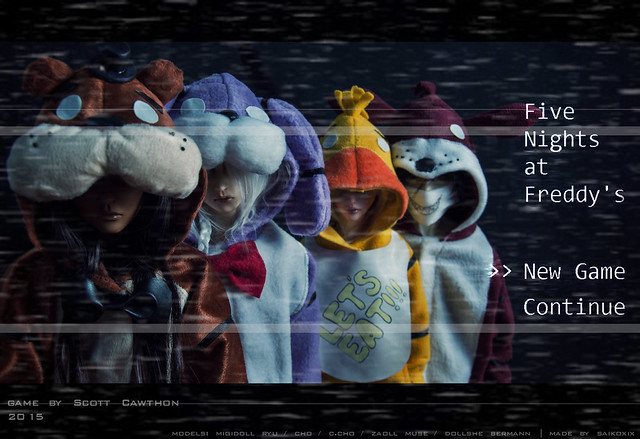
Last year, in August,  I saw an article about the Rock A Fire Animatronics, a robot band that used to perform in Chuck E Cheese franchises but had moved on to perform as a solo act in Orlando. Then I confused the article with some posts I had seen on a place called “Freddy's Pizzeria”, and googled Five Nights at Freddy's. That was stupid.

Image source: http://images.gameskinny.com/gameskinny/548e083ed4f62a16810595a27096da6a.jpg

Five Nights At Freddy’s is a game that features a fictional pizzeria, though a lot of people have claimed that it reminds them of Chuck E. Cheese. It's also a horror game where you play a security guard trapped in a room, having to keep the doors closed against walking, haunted animatronics, but you probably know all this, since it’s become quite the online phenomenon. I made the mistake of watching the trailer at night, and reading up on the gameplay. I was scared of the dark for several months, up until I saw Markiplier playing the game and was able to laugh at his frustration.

Five Nights has since become a multi-game franchise that has sparked a rather controversial and excited fanbase, with the creator Scott Cawthon having released four in total plus a Halloween edition of the fourth game, and even some talk about it becoming a movie. Each succeeding game seemed to add a bit more to the story, making the animatronics seem more tragic than monstrous while showing the utmost cruelty and kindness of human beings. Then Game Four came out, which undid the satisfaction that the viewers got from the third game, and left us with a few ambiguous situations and even more unanswered questions, turning what had seemed like an ostensible “happy” ending into a tragic beginning.

Image source: https://farm8.staticflickr.com/7794/17491422135_a4fbe31a6e_z_d.jpg

This past Fall 2015, Scott has revealed that he knows all the answers to the questions he has kept under wraps, that he plans to make no more games in that original storyline, and that his latest game will be a different story entirely. In addition, he showed a locked box that supposedly held the answers to the game, and told us he wasn’t going to open it. This felt like a huge middle finger to the fans, and to the people like me who weren’t diehard fans but were nonetheless lured in like innocent insects to a sticky mosquito trap.

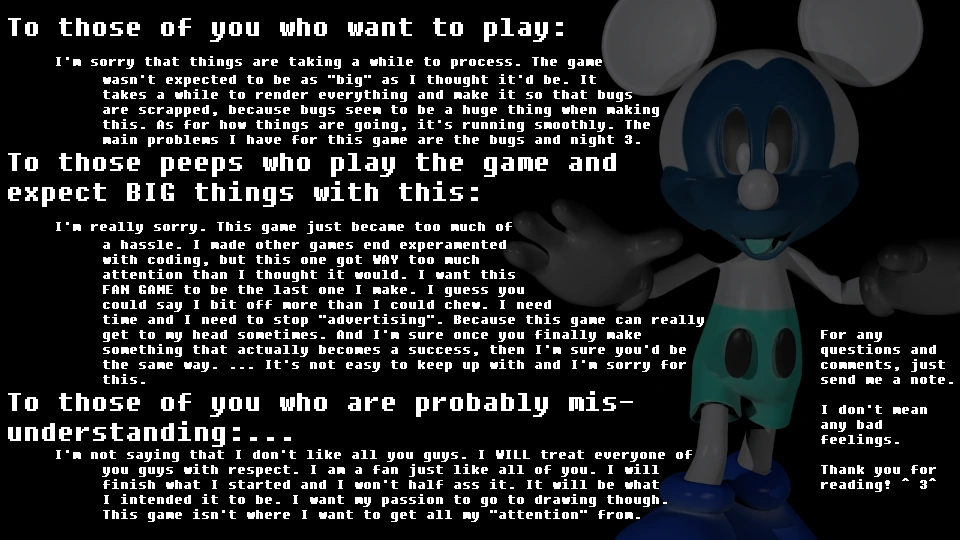
A Five Nights at Freddy’s clone ended, or rather disappeared, in a similar fashion. Five Nights at Treasure Island took the same game mechanic setup and transplanted it to the Bahamas, at the abandoned Disney World resort “Treasure Island”, complete with haunted Mickey, Donald, and Goofy “suits” plus several unknown figures. After two demos, one of which merged several Disney Creepypastas, the game creator and his successors decided to pull the plug on the project. Five Nights at Treasure Island is on indefinite hiatus, with none of their questions answered either.

Image source: http://vignette4.wikia.nocookie.net/five-nights-at-treasure-island/images/8/80/A_message_by_anart1996-d89mmcq.png/revision/latest?cb=20141220122523

Why do I find these actions frustrating? Because the games triggered in me a fear of the dark, but their story helped to alleviate it; I was able to focus on the backstory that fueled the tragedies that had occurred before and during the games. We got the Purple Man, a monstrous human whose true features we never saw, and we saw the fate that befell him when karma caught up to him. Then we see another heinous crime occur, without his involvement on screen, and the viewer becomes unsatisfied. We never see what happens to that perpetrator, and we can’t even place the event on a definitive timeline. Five Nights at Treasure Island is just as bad because while we may have some opinions on how Disney’s business executives skirt across lines and ethical boundaries, the supernatural mystery is quite alluring, more so that if you know that Treasure Island is real, albeit not haunted.

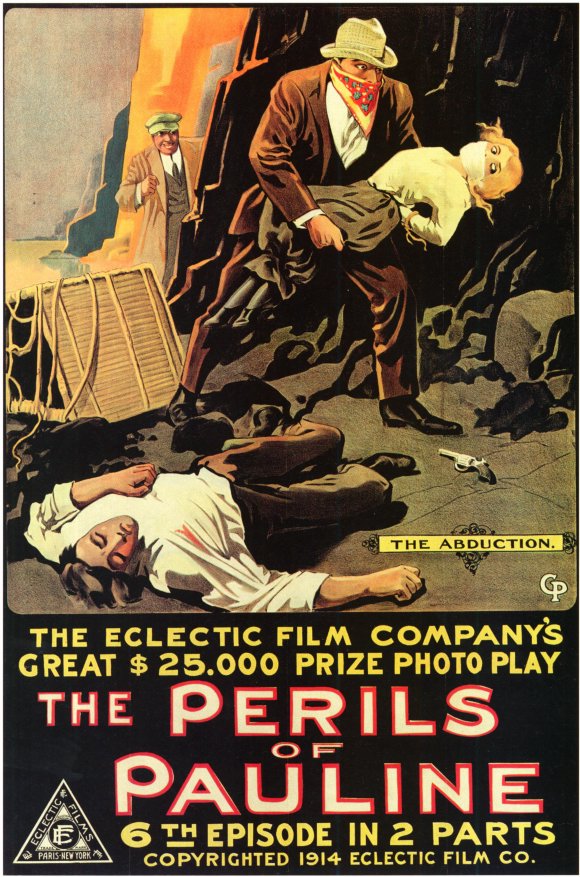
I would call these endings “cliffhangers” precisely because they leave the sensation of what the original cliffhanger, as Charles Dickens put it, must have felt like to the readers either listening to an epic saga, but at least cliffhangers are typically resolved. Instead we have loose threads to two different stories that provoke obsessions, with the creators deliberately withholding the answers. It’s one thing if the creators plan to create a huge reveal in the story, the way Alex Hirsch has done with multiple plotlines in his show Gravity Falls or J.K. Rowling did with Harry Potter, but it’s quite another if he or she plans to never tell that tale. The reader deserves some common courtesy when the creator promises to add more to the story with each installment.

Image source: https://upload.wikimedia.org/wikipedia/commons/8/8c/Perilsofpauline.jpg


If you’re going to write a story with multiple parts, with each succeeding part building on the previous one, you have to promise to answer most of the questions that you set out in a long work. Not answering these questions will lead to frustrated readers, and they will let you know if you missed a spot. Deliberately and openly withholding the stories will provoke anger from the fans, since they have devoted their time to reading. Speaking as a reader and a writer who has been on both sides of the equation, with stories that have made people ask questions and I’ve frustrated them by not answering them, I understand that answering the big questions is the important part. Writers and readers exchange words, and those words must have a current of common courtesy. I know that if I make that mistake, my lovely beta readers will let me know and express their frustration openly.

On that note, I am going to resume my storytelling break and return to detailing themes for the month, and story plotting. For those doing Nanowrimo, good luck and I hope that you meet your 50,000 word goal!


Friday, August 28, 2015

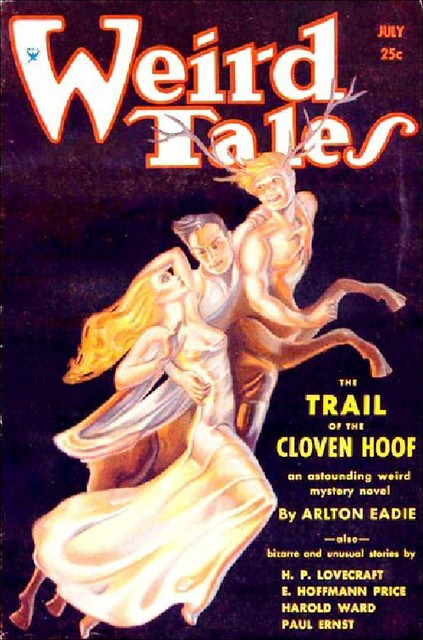
Taking Back a Tainted Legacy: Why She Walks in Shadows is important

Hi all! Wow, it's been quite a summer with school starting this week, getting doctor's checkups, and awaiting a potential tropical storm that hit the Caribbean this morning.

So, a bit of big news: the anthology She Walks in Shadows is coming out in October, but pre-sales have hit the 200 mark for orders and has received positive press. In addition, Expanded Horizons accepted my short story "The Castle's Women," and I will post the link when it's online.

Image source: https://farm4.staticflickr.com/3754/9816990715_8d989dee02_z_d.jpg

Recently The Mary Sue did a short article on the She Walks in Shadows anthology, commending Silvia Moreno-Garcia's goals for taking on such a project. Some of the comments, however, were concerned about the fact that Lovecraft was a notorious racist in addition to being a misogynist, completely missing the point that She Walks in Shadows specifically asked for stories from POC authors as well as female authors. Garcia had to step into the comment thread to explain this fact,

Then some people took Garcia to task for creating a woman's only anthology, and she blogged an FAQ info-post discussing the issue, as well as her refusal to apologize for being a "little bitch" in response to one angry email. Garcia handled the insult with grace, and explained that she wanted to create a space to showcase the "girls that play with squids," to paraphrase what she writes. I was rather insulted on Garcia's behalf that someone would take the time to insult her for adding creative democracy to the mythos, and I could not understand why people would want to cling to their idea that a space for female fantasy and horror writers wasn't needed.

Image source: https://farm1.staticflickr.com/102/254267186_34d90adcc7_z_d.jpg

Lovecraft has a tainted legacy, because while the man had remarkable ideas regarding great evils we cannot comprehend, not to mention a massive generosity for his friends and fellow writers, he was a racist. I didn't discover him directly or the admiration that my favorite authors like Neil Gaiman seemed to apply to him, though I like what he inspired in other people, and how he could make seemingly ordinary objects like a color terrify his readers. No massive obsession occurred, or an instant passion from reading the man's words; in fact, I had to slug through them and labor through the stories.

Then I talked to a librarian on Friday, mentioning the anthology. We've known each other for years, sharing a mutual love of comics and fantasy. I mentioned the fuss going around the anthology, and admitting I don't like Lovecraft the person (more on that below). The librarian then remarked on how Lovecraft was a product of his times, and that Edgar Allan Poe, who I preferred, wasn't raised by three maiden aunts. He then said something interesting:

"I related a lot to Lovecraft growing up. He never really aged past the age of fifteen."

Image source: https://farm1.staticflickr.com/26/40695488_ea72e0da8b_z_d.jpg?zz=1

At the time I couldn't wrap my head around the concept, especially since this year my anger about racial injustice has increased, but later I was able to ponder the matter. As someone who likes to read on author's lives, I like to see how other writers developed their methods, to see what worked for them and how they worked on their stories. The thought of Lovecraft creating a connection with his audience made sense, given that if he hadn't written words that made an impact, then he wouldn't have been considered the father of cosmic horror.

Cosmic horror, as it was explained to me, is about the horror of facing creatures and a universe larger than us, of seeing human beings as mere ants compared to the fathoms that our naked eyes can only witness. I misinterpreted this as my usual apprehension that comes when watching the stars and picturing how asteroids as large as mountains can crash into the ocean and cause catastrophic tidal waves. I had to do further research to understand that the concern involved encountering clever monsters as large as mountains that took over our minds and hearts. To be honest, the idea doesn't scare me because the idea of our sun blowing up or an asteroid crashing into the oceans seems more plausible than giant tentacles invading our minds.

 
Image source: https://farm7.staticflickr.com/6092/6315719137_7653a3f1e7_z_d.jpg

I gained more respect for cosmic horror after reading other takes on it. A Sherlock Holmes anthology had two stories featuring the Old Ones, and how they instilled horror in Watson during one tale, and inspired honor and duty in Sebastian Moran in another. The horror wasn't real to me before, but it became real. I was able to develop healthy respect, while wondering why the Old Ones had to be evil and conquering by default.

"The Opera Singer," which I wrote for She Walks in Shadows, was thus challenge because, though I have gained respect for the mythos, I do not like Lovecraft.  His prose is too dry for me, and the only story I liked-- "The Color out of Space"-- worked because the idea of a color on the spectrum that could kill people was enthralling. All of the "Old Ones" were demonic, and the title character in "The Dunwich Horror" never had a moment where we saw his perspective. Surely space squids existed on a spectrum of black and white, where they varied in what they wanted, and the Old Ones wanted more than to take over the minds of men and lure them into slavery. The story and novel exist as democracies, in that each character gets a chance to tell his, her, or its story; Lovecraft horror decreed that the Old Ones have to be evil because they desire to take over the minds of men, and that someone like Wilbur Whateley never got a chance to demonstrate different facets because his author wanted to assure the reader that Wilbur was evil and not properly human.

Image source: https://farm4.staticflickr.com/3213/3115958547_32927d3de2_z_d.jpg?zz=1

With that in mind, the creature that does exist in "The Opera Singer" does not consider itself evil because it exists on a spectrum above petty humanity, as the title character grows old and slowly deprived of the world's luxuries, like basic kindness or nostalgic places. The woman who inspired my black  main character, I encountered her walking and pushing her own wheelchair, and she told me how she used to sing in opera and how now she couldn't go to her favorite practice room because of regulations. She stayed with me, up until the prompt for She Walks in Shadows went up and asked for tales.  I wrote the story to ponder on how people change before our eyes, but because we blink so many times we hardly notice since the changes are small and incremental.

Being able to tell these stories with the Lovecraft mythos is important, to expand on the characters previously deemed "monsters" and "horrors," whether or not they were cosmic horrors or black-faced,"apelike" stereotypes. We need to reclaim that space to show that we can move past Lovecraft's times and his issues, while adding more good to his legacy. Reclaiming does not mean that we oust his original prose, or threaten his fanbase; rather, we create a safe space that can coexist with previous canon.

Image source: https://farm8.staticflickr.com/7011/6808988379_ebdaf2963b_z_d.jpg

So yes, I may not play with galactic squids the way other authors do, but I enjoy being included in the fun. If someone thinks that a woman doesn't have the right to create her space, or to participate in one when the field is primarily dominated by a protective majority, then I will most likely listen to that someone out of politeness and participate anyway. The writing arena is a democracy in that we share our stories equally, with different voices and perspectives. When a past error remains in one historic piece, then the only thing to do is to write a tale to counter it.

The space doesn't have a limit. Neither does the human mind. Let's fill both with varying perspectives to change racist legacies.

 Image source: https://farm9.staticflickr.com/8528/8584275508_1f21299163_z_d.jpg

Sunday, May 17, 2015

Harriet The Spy Was My Nancy Drew

Last week, the 85th anniversary of Nancy Drew happened. The article details how Nancy became a role model to girls living in the Great Depression, driving around in a car and wielding a gun to deal with potentially dangerous criminals. Later editions turned Nancy into a damsel in distress, needing a college boyfriend to save her, but she inspired a generation of female readers.

I felt a sense of disconnect. The Nancy Drew that I knew was not the girl detective of my childhood. Sammy Keyes eventually became that,but another fictional lady came in between. She was a little older than me, wore fake glasses and ratty jeans to go out spying, and she wrote in a notebook. This was Harriet the Spy, from her titular novel by Louise Fitzhugh.

Image source: https://farm1.staticflickr.com/6/10922464_a04a3a97a3_z_d.jpg?zz=1

 I shied from reading Harriet the Spy at first because of the title. The thought of reading about a girl that spied on others, including her friends, and wrote about it in her journal, did not appeal to me. I like reading about characters who are fundamentally good and who didn't get into trouble. My siblings kept checking out the book from the library, and I kept returning it.

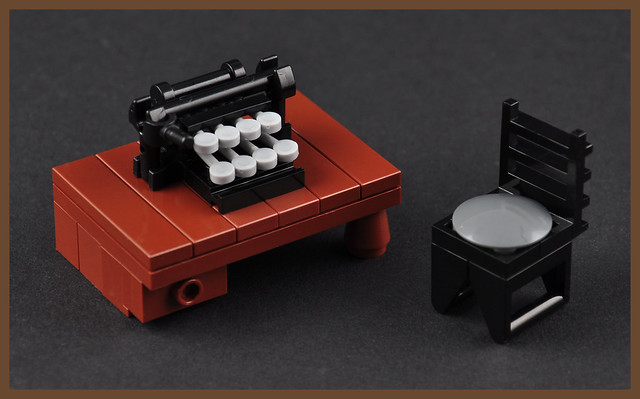
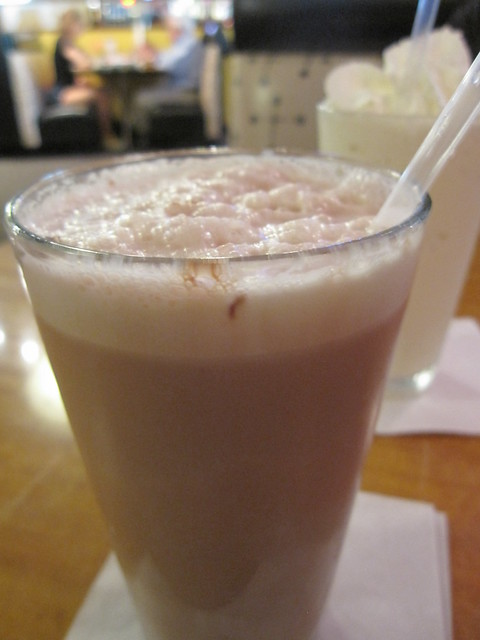
Then one day, I cracked it open and started. I became captivated, and started reading. The book paints a picture of the 1960s, when children could wander the New York City streets without their parents worrying, and slip into dumbwaiters. Kid bullies could spill bottles of ink on their victims because ink bottles were part of the curriculum. Authors still use heavy typewriters, and can crinkle up their paper with poor handling. People could order egg creams -- a type of cream soda that I had never heard about before-- and sip them slowly. I had always pictured them as a drink to slurp from a bowl, but they apparently came from tall glasses.

This is what kids drank in the 1960s
Image source: https://farm5.staticflickr.com/4119/4809140778_c789c0b7de_z.jpg

More importantly, the story itself featured an imperfect yet likable protagonist that doesn't want to change when the world imposes changes upon her. Harriet loses a lot of valuable things, and people, and the path to winning them back or letting them go does not always have a straight answer. She represents brutal honesty in a world that does not appreciate hostile words, and thus suffers persecution. Even readers, like my brother who recommended the book, have little sympathy for Harriet and for the honest notes she writes in her notebook. The film adaptation makes Harriet's thoughts worse, so that her former friends have a more valid reason to bully her, though there never is a valid reason for bullying a child in my opinion.

Anne Lamott in Bird by Bird mentions how writers as children are told to ignore their instinct and accept little lies as opposed to swallowing and registering proper truths. One cannot create believable fiction without knowing how real life works, and how people behave, why they act the way that they think. People do and think horrible things, sometimes with good intentions.  Sometimes their motivations are complex, but they do not behave in a vacuum. A writer, too involved in the art of crafting as I am, can miss all those actions and motivations and real life, perhaps because we cannot face the horrifying truth.


Image source: https://farm8.staticflickr.com/7398/10340268116_58fa280623_z_d.jpg

 
Harriet taught me that a character with stubbornness and brutal honesty can be likable, and she demonstrated a skill that all writers need: the ability to observe. This eleven-year old girl spies so that she can learn more about people, to put them in the books that she will write later. She faces the daily mundane horrors that plague humanity on a regular basis, whether they concern heiresses with too much money or birdcage makers with too many cats. Her problem lies in having no filter for her thoughts when they end up in her notebook, and when her notebook ends up in her friends' hands.

I had an epiphany after reading Harriet the Spy: I wanted to write, and to become a writer. My desire to create stories hadn't notified me; the fiction prompts in preparation for the FCAT hadn't notified me either. Yet I wanted to write, and to create worlds that would absorb readers the way older books had absorbed me.
Image source: https://farm4.staticflickr.com/3292/2908092283_2f7283a9f9_z_d.jpg?zz=1
Unlike my sudden desire to learn figure skating after reading the Boxcar Children, writing was a skill that I could hone on my own time, with just a piece of paper, or a blank notebook, and a pen. The computer could also help, with various writing programs and access to the Internet. I learned later how to connect with fellow writers using the web and to find soundtracks,  but at the time computers only made me feel official, that I could write something that could be printed and look official.
 There was a bit of a problem: I had the ideas, thanks to Harry Potter fanfiction and inspiration from fantasy authors,  but I didn't have any idea how to structure a story, or what elements were involved. I didn't know how to use words to develop character. Worst of all, I didn't know how to write honestly, or how to observe people.

 I withdraw from the real world, finding a structured fiction more appealing than the harsh realities of our time. "Write what you know" seemed to be a facetious piece of advice, since what a person knew was not necessarily what interested them. I didn't start incorporating personal experience into fiction until high school, and even then it took about four more years to learn that it was okay to do so, in fact encouraged.

Image source: https://farm2.staticflickr.com/1159/763255266_eae4a9aa27_z_d.jpg

Harriet knew better than I did about how to write, and how to record life without a filter. It gets her in trouble,  but the book argues that writers need to be honest with themselves while lying to the people they know to avoid hurting people's feelings when you use real details. One can use filters, but only after the rough drafts are written.


Wednesday, February 18, 2015

Valentine's Post: Harry Potter's Crushes


Happy belated Valentine's Day, everyone. Hope that your day was filled with positive feelings, or at least the time to kick back and watch a good movie. Two of my short stories got accepted into different anthologies last week; "Three Prom Dresses" finally has a home with the Rejected Anthology from ACA books, and "The Opera Singer" will have a place in She Walks in Shadows.

Earlier I had written a post about Mary Sues, and why as an adult I stayed away from them. For this post I am going to refer to Mary Sues and self-inserts when talking about romance in one of the most memorable fantasy works of all time: Harry Potter.

I am not going to refer to this kind of shipping. Obviously.
Source: https://farm2.staticflickr.com/1121/866486247_0802825b29_z_d.jpg

One cardinal rule: not all Mary Sues are self-inserts, and not all self-inserts are Mary Sues. A self-insert is a a real life person getting inserted into an established fictional world, usually from the present day,  and they are quite popular in fanfiction. JKR in Harry Potter did a self-insert, parodying her teenage self through Hermione Granger, a brunette "swot" who becomes one of Harry's staunchest companions.

How do self-inserts relate to Harry Potter apart from Hermione? Quite a few fanfics for Harry Potter featured OCs that went for him, for his friends or for his rivals. Eliza Diawna Snape was notorious for shipping a self-insert with Draco Malfoy in her Eliza trilogy, for example, and TVTropes has her under the entry "Old Shame".

I wrote self-insert fics, I confess. Often I made my fictional counterparts relatively perfect, or at least likable. But one thing about these characters?

Most of them were not Indian or based on me. They were very, very white, and based on my white friends. When I put myself in Hogwarts, I made myself very alone, solitary, and too young to interact with the Harry Potter gang because Harry, Ron and Hermione do not interact with first-years. This made for a depressing reflection of how middle school was like for me already, so that fanfiction was never finished.

Harry Potter did not do well with dating while a teenage boy. We see this in Goblet of Fire most prominently, when Professor McGonagall orders him to acquire a date for the Yule Ball and he wants to ask his crush Cho Chang. He ended up taking one of his classmates instead, Parvati Patil. Parvati was one of two Indian characters featured in Harry Potter, who showed interest in Divination, stood up for Neville in their first year, and took a dislike to Professor Moody's all-seeing magical eye for good reason. In other words, she was a full-fledged character with dark skin, someone I should have related to during the series.

JKR did not take that opportunity. Harry alienates Parvati during the Yule Ball by staring angrily at Cho with her date Cedric Diggory, and in future books she is seen as reasonably "cool" towards him. I didn't ship her and Harry-- she was better as a distant classmate-- but any girl in her shoes, no matter what color of her skin, would have felt insulted and ignored. She and her twin Padma become extras in future books, albeit loyal allies to Harry, while other people of color like Dean Thomas receive decent backstories. I ended up relating more to Luna Lovegood and started shipping her with Harry. Luna was white and Irish according to the films, but she was sweet, and she made Harry feel better when they talked. Naturally, I felt a bit chagrined but accepting when Ginny Weasley got together with Harry, since it had been established several books beforehand.

Image source: https://farm3.staticflickr.com/2440/3735422865_b54bb7f4f2_z_d.jpg

It was quite a mess, to realize that Harry had dated a total of three girls before dating Ginny, and more of a mess when realizing that two of those characters were racial minorities. Add the number of fanfiction writers that created white OCs to ship with the Harry Potter, and the combination created a subconscious reinforcement: dark-skinned aren't good enough for Harry Potter. I didn't have a crush on Harry, though I had a crush on his actor Daniel Radcliffe, but I wanted to see him have a happy romantic ending after defeating Voldemort. Thus, when I wrote my Harry Potter fanfiction that mercifully vanished into cyber heaven, I based his love interest on one of my best friends who happened to be white, redheaded and pretty.

I didn't realize that Cho was Asian until I saw the films -- the book merely said that she was pretty and had black hair-- but I knew very well that Parvati was Indian. JKR reinforced that Harry wasn't happy with the only prominent female Indian at Hogwarts, and she was characterized as one of the flakiest Gryffindors. Her sister Padma was given even less screen time, having a few pages with Ron. Thus when there were audition calls all over the United States and England to play the identical twins, I didn't even make an effort to try out. For one, there were too many girls vying for a bit role in a film that would later disappoint me in the theater, and for another I didn't want the role as the girl that Harry Potter ignored during a school dance.

Image source: https://farm3.staticflickr.com/2302/2394394834_ba530bb225_z_d.jpg

JKR did not mean to make this implication; heaven forbid that she would intend that the hero of a universally read fantasy series cannot end up with a dark-skinned girl, or vice-versa. She's also not the only author to make such implications: with very few exceptions, the more mainstream fantasy novels from the early 2000s tend to have white leads ending up with white love interests. The fact that there were no prominent Indians, except one adult in the Magickers whose decisions disappointed me, only drove the nail deeper into the wood. As a result, my stories mainly featured white protagonists, black protagonists, once even a Native American protagonist-- I did a lot of research for the latter, who stars in a YA novel-- but not that many Indian protagonists. I felt a primal shame, more so of a fraud since while living in America I only knew the nuances of traditional South Indian culture but not the details.

These days, I tend to find a trend in the opposite direction: anthologies and short story magazines want more diverse main characters, with various people of color and backgrounds from different countries. Eggplant Literary Publications asked for fairy tales revised with people of color, and after two false starts -- first setting a story in Norway and then with a an American-Japanese family-- I managed to write a tale that paid homage to "The Princess and the Pea" as well as traditional Brahman culture. Having that story accepted felt odd, since it felt like I had contributed a little piece of myself to a fairy tale anthology. People wanted the diverse part of me, that they valued a portion that I had denied for so long.

Image source: https://farm3.staticflickr.com/2329/2062078154_a5ed7dcd6d_z_d.jpg


Harry Potter taught me many things, namely the power that comes from building intricate worlds, the power of friendship, surviving trauma as well as victim-blaming, and telling the truth despite the consequences. JKR reminded me how much power words have, how they build characters and destroy tyranny.

With that said, I'm unlearning about what it means to be Indian in a work of fantasy, especially an Indian-American that appreciates South Florida culture more than South Indian traditions. Now I'm writing more short stories with people of color, and exploring the various cultures, current and ancient, that can make for great conflict. Reclaiming the potential of Indian power still feels strange, but it's a long time in coming. 

Thursday, February 5, 2015

Sick Weekend Two: The Danger of Silence

Image Source: https://farm4.staticflickr.com/3318/3483365697_7c6f2a58d3_z_d.jpg

Hey All,

I'm sick again. Fortunately it's not as painful as the sickness that I had in December, but battling a sore throat and mild fever while doing schoolwork and writing this blog. But I feel the need to write it, to keep up with my earlier resolution to blog once a week. My problem was that I hit the dreaded sensation that  every writer must get in their lifetime: a Block.

Image source: http://lh4.ggpht.com/_XVC02d8sUFU/TVMLNmQ2SUI/AAAAAAAAH2Y/azt2wc-Amt8/19950303_thumb%5B1%5D.gif?imgmax=800


When I was a teenager, I read books about writer's block. I read comics about writer's block, including Neil Gaiman's "Calliope" which is a story that has since become a cliche in popular culture regarding writers interacting with muses. When I read these stories, I laughed; the idea of not being able to write a word seemed to be an inherent character deficit that could be corrected.

Now that I'm in a slump myself, I feel some sympathy for some of the fictional writers that suffer blocks. Not the one in "Calliope" though; he gave all writers a bad name in terms of what he does to the titular muse. I feel sympathy for Mike Noonan in Bag of Bones, however, because he stops writing due to external stresses, namely his wife dying in the novel's opening pages. Like him, the pressure to do well and stay healthy has affected how I view the words. Sometimes it feels like I'm stepping from one slipper stone to another across a rapidly moving river whose current has destroyed others.

Image source: https://farm5.staticflickr.com/4121/4895250473_023db9cc36_z_d.jpg


Traditionally "writer's block" refers to a writer not having any ideas, at least according to popular culture, or having stale ideas that quickly fall apart on the written page. In most cases the blocks happened after the writer had hit success with one novel, and had shut down shortly afterward. The solution to such a situation, which Joanne Harris did implement in real life, was have another book ready for publication. In her case she nearly suffered a block after Chocolat became a success but had already written Blackberry Wine, her next novel that delved into writer's block, the fantastique nature of the French countryside as well as tourist threats. I was planning to do the same thing with Carousel, since I have two novel rough drafts on queue, but stress and business school interfered with my plans. My next long work probably won't happen for a while, not until I finish some short stories.

For those wondering, I don't agree with how Jay the protagonist was portrayed during his block in Blackberry Wine; he got a block because he based his first successful novel on real life, and the success drove him to write "trashy" science fiction for ten years. Call me a fan of the former pulp writers like Ray Bradbury, but there is nothing shameful about writing about aliens as opposed to "literary" fiction. Also, I'm suspicious about basing entire novels on real life, since that can lead to hurt feelings and lawsuits. Jay could have easily started traveling with the money and freedom that he earned, to find more adventures to put into his books. For those wondering about his girlfriend Kerry, it's never a good idea to volunteer to be a blocked writer's muse and hope to encourage good works out of him or her. You will just end up frustrated and disillusioned. Better to brainstorm and encourage, rather than to cut their "trashy" works.

Currently I'm working to get out of my slump and back into the field, while searching for jobs, managing home duties and keeping up in schoolwork. I'm optimistic because this week I actually finished a decent tale for a friend's birthday, the first breath of life into this school year. And with luck, 2015 will mean that I make my goals with aplomb again. Wish me luck!

Image source: https://farm2.staticflickr.com/1119/675520667_7572f0614c_z_d.jpg

Tuesday, January 6, 2015

Goals and Plans for 2015


Image source: https://farm4.staticflickr.com/3097/3157409347_9f4cf50261_z_d.jpg?zz=1


1) Write at least 750 words every day, no matter what, and make that goal.

2) Submit one short story a week, on average. (Yesterday submitted three short stories to different magazines, so I'm good for the month, but will keep submitting.)

3) Read one hundred books this year. So far have read two this week and have started a new one.

4) Maintain a 3.5 GPA for the next three semesters. And aim higher if I can.

5) Get published in Shimmerzine. I will find the right story that fits the magazine's requirements, that is dark and emotional.

6) Meditate three times a week. Ideally progressive muscle relaxation, since that seems to be the most

7) Live each day as if it's my last.

8) Become flexible. Really, really flexible. I should be able to stretch out my worries.

9) Blog once a week, about various happenings.

Image source: https://farm3.staticflickr.com/2692/4110421350_944fc17f2c_z_d.jpg?zz=1


Happy New Year everyone! What are your goals?

Sunday, December 7, 2014

A Month in the Nano


 Image source: https://farm4.staticflickr.com/3043/2999293339_91a9be95fb_z_d.jpg?zz=1

Written last year in 2013:

This month, for the first time, I signed up for Nanowrimo, to write up several short stories as part of a collection, to support my friend Corissa Glasheen.

I normally don't do Nano because November happens to be the month before finals, in both high school and college.


Written this year:

The text above was from a blog post intended for December. Obviously I never finished that, for various reasons. Some days the words just don't flow.

Image source: https://farm9.staticflickr.com/8305/7987553456_48bd02f63f_z_d.jpg


I did Nanowrimo this year again, or tried to. Despite having time pressure, and knowing that the writing would require at least several hours a day, I made an attempt after seeing more of my friends take a stab at it. My goal was smaller, being in graduate school and having less time in the day to do a huge novel, but I thought I could do 25,000 words. Simple, right?

 Wrong.

Things had changed greatly in a year, both on the outside and on the inside. For one, I was fighting a lot of inner doubts due to the amount of schoolwork that was piling up, not to mention an internal battle about what I prioritized. In my senior undergraduate year, I had a relatively less rigorous curriculum, having fulfilled most of my requirements, and I had achieved minor success by publishing several short stories. This year I had a novella and several short stories published, but the academic course load was much higher for my MBA, and my stories weren't gelling together as well as they used to.

This kept going on through my head every time I started a story
 Source: https://farm3.staticflickr.com/2804/4277917630_0081ff7f61_o_d.jpg

For another, the words weren't coming as easily as they had come the year before. As mentioned in an earlier post, the home obligations and responsibilities increased tenfold, and when things are dramatic, I have trouble writing.
When I finally did have time to write, little as it was, I kept asking myself what needed the highest priority. My plan was to write a small collection of short stories, some fanfiction and some of it original. One of the fanfiction pieces actually got finished, but most of the other stories were incomplete or had extremely rough endings. Over the winter holidays I'm probably going to return to them, including a character sketch based on a former opera singer I encountered while doing group projects.

With that said, I managed to elucidate to my classmates that I had written a book, thanks to Public Speaking class. We had an assignment to pitch any product, so I pitched Carousel as a potential film for Laika Animation Studios for roughly five minutes.The professor later commented that I finished each sentence as if it were a question, and that my body language could use some work, but at least five classmates asked where they could buy the book. One even bought a hard copy that I had on me.

Do I regret taking on the extra project, though, and missing my personal goal? No, because the main reason I signed up was to support friends who were doing Nanowrimo, who had the time and the energy to write 50,000 words in thirty days. Those friends actually did make the goal, and I had the privilege of reading their preliminary material. Reading that material was a November highlight.
Add a cat sitting on her lap, and this would be my friend in question. She and her cat are awesome together.
Image source: https://farm2.staticflickr.com/1039/617415521_7baaa995d4_z_d.jpg?zz=1


The experience also taught me an important writing lesson: have a focus. Finish a story after starting it, before moving on to the next one, even if the story is terrible. Find an outlet for the stress going on, even a writing outlet. And always talk it out with someone to find out why the words aren't gelling.

I'm going to sign off and buckle down for finals this week, after which I will spend the month of December writing, learning from what happened in November. Forget November being National Novel Writing month; December is Daily Writing Fiction Month for this writer. I am going to be more productive and take advantage of the month's vacation from school.

Happy Holidays, and congratulations to everyone that made their Nanowrimo goal.

Tuesday, November 18, 2014

Reasons for My Hiatus: Slump

Hi all,

I know it's been a while since my last post, and I apologize for that. A great amount of events occurred, including the start of business school (long story), family drama, and writer's block. Plenty of writer's block. 

So, the first order of business is that I have a book out! Carousel has been released, in ebook and print format! Over a year ago, I posted a blog on writing the initial draft for the novella, but my baby is finally out into the world and getting read!

Best for those who like fantasy and music

Several of my other tales have come out; Aurora Wolf released "Forgiveness," one of my moodier short stories, and Eggplant Publications came out with the ebook of Spindles, which includes my short story "The Brahman and the Onion". So definitely I've been productive, submitting stories and brainstorming creative responses for anthologies.

There's not all good news, however; I had to put my webcomic A La Mode on hiatus because business school ended up demanding more of my time than anticipated. My older brother also had to move out this year, to pursue his fellowship in ophthalmology, and the house has been quieter without his constant presence. He still visits at least once a month, but there has been a marked difference in our lives without him. Namely I've had to be more of an adult than I was before, taking on more responsibilities. This has left me feeling like I want to withdraw into an acorn shell, and hide from the world.

Source: https://farm1.staticflickr.com/168/472107806_ac117c65de_z_d.jpg

Something I've learned about myself: it's hard to write well when I'm stressed. More importantly, it's hard to write depressing material when I'm stressed, namely horror stories. That's why at the moment I'm working on lighter material, doing Nanowrimo at a much slower pace than last year. I'm also working to learn how to meditate, and find healthier outlets. My new goal is to blog at least once a week, and I have a few ideas in the queue. I hope that you can all hang on till the ideas surface, including my impression on research and on Disney. Signing out:

https://farm3.staticflickr.com/2828/8950176562_8bbd238321_z_d.jpg

Tuesday, July 8, 2014

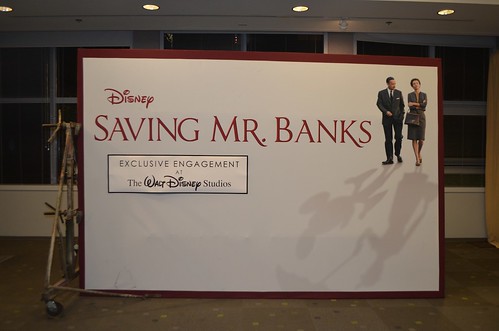
Selling Your Soul: Thoughts After Watching Saving Mr. Banks

"Of course a movie shouldn't try to follow a novel exactly — they're different arts, very different forms of narrative. There may have to be massive changes. But it is reasonable to expect some fidelity to the characters and general story in a film named for and said to be based on books that have been in print for 40 years." Ursula K LeGuin
 Image source: https://farm6.staticflickr.com/5490/11405431534_c5ff5cafef.jpg

Happy belated Fourth of July, everyone! Hope that no one got burned by fireworks, or rained out. It was quite a wet weekend, and I spent that Friday relaxing. Then I got the most wonderful news via the Alban Lake newsletter; my novella "Carousel" has been accepted! It will be published in the fall, and I will inform you of further details when I receive them.

My birthday happens to be tomorrow, but we celebrated over the weekend, my family and I, by watching a Disney biopic I've been dying to see: Saving Mr. Banks. The reason was twofold: I have a passion for stories about authors getting their books published or turned into film, and because Mary Poppins is the best Disney live-action film, period. The story, which isn't accurate with actual details, is about how Walt Disney cajoles, bargains and eventually convinces Mrs. P.L. Travers to sell the book rights to him, so that he can make a film for his two daughters. Parallel to that, we see Mrs. Travers's childhood told in flashback, about her loving relationship with her alcoholic dad, who can't keep down any banking job he acquires. Because of the reality that inspired the Mary Poppins books, Mrs. Travers doesn't want to sell the rights, and goes to Los Angeles purely to refuse the offer. Disney won't give up, however, and he will do what he can to convince her, while sneaking cartoons into the finished product and having Mary Poppins sing.

If Disney bought me champagne, hired a limo driver and paid for my two week stay at a nice hotel, I'd be much more convinced to give him the rights to me work.
Image source: http://i2.wp.com/screencaps.us/201/3-saving-mr-banks/full/saving-mr-banks-disneyscreencaps.com-1469.jpg

The film portrays two real human beings in somewhat sympathetic light: Walt Disney does business with his animation and is not afraid to lie, while Mrs. Travers doesn't want her creation to be tarnished. Yet we can see that Disney has love for the books, seeing that he fought for twenty years to obtain the rights and allows the author to approve the script, a right that most authors don't have nowadays. And the reason? To keep a promise to his two daughters. He could have chosen another story with a dead author or a more agreeable one, like he did with Alice in Wonderland and Peter Pan, but he pursued Mary Poppins for twenty years.

My personal preference for the film and bias comes from watching it a dozen times as a child, learning most of the songs by heart. Julie Andrews brings the right balance of sweet nature and stern front to the role, so that Mary Poppins is charming but by no means saccharine, and David Tomlinson provides perfect foil as the stiff Mr. Banks who finds his life turned awry by this strange nanny.You have the most powerful music in the dramatic arrangements of "Feed the Birds" and a story that acknowledges that parents have it harder than their children do, as well as the dramatic side to growing up.

http://i1.ytimg.com/vi/XHrRxQVUFN4/hqdefault.jpg
Mrs. Travers didn't like "Feed the Birds," the best song in the movie. Just . . . what

Image source: http://i1.ytimg.com/vi/XHrRxQVUFN4/hqdefault.jpg

I had trouble seeing Mrs. Travers's point of view for several reasons: she is a sour puss about the whole endeavor and disrespects every part of the film process, she takes for granted the red carpet treatment that Disney bestows on her, and Mary Poppins makes a better movie because of the changes from the books.  All these points I believe are important, since the treatment she received is unheard of most days.

These days a writer would have to be J.K. Rowling, Neil Gaiman, or Cressida Cowell to receive such treatment, since the rights are usually negotiated between a publishing company and literary agent. Ursula K. LeGuin has also pointed out that most writers don't get to approve the script; she didn't get such privilege for both adaptations of her Earthsea novels. The only thing you can do is blog about if you liked the movie or not, and in addition, Walt Disney's films at least had quality animation during the time period and original, legendary music. In the twenty-first century, quite a few authors have had Disney mangle their books at times, or create a faithful adaptation that cannot sell the story. Meg Cabot can assert to the former regarding Avalon High, though she remains diplomatic and optimistic about reaching new fans.

This film is a travesty for people who read the books, or for those who appreciate good storytelling
Image Source: http://ia.media-imdb.com/images/M/MV5BMTc2ODk0ODk0N15BMl5BanBnXkFtZTgwNzU1NDA2MDE@._V1_SY500_SX343_AL_.jpg

After thinking about Saving Mr. Banks for a day, however, I wondered what it would be like to have one of my works adapted, and dramatically different from what I envisioned. "Carousel" came to mind, a story that features orchestra and modern classical music prominently; the modern music pays homage to "The Rite of Spring" with its chaotic, dissonant chords while providing conflict for when Renee's orchestra can't play their new piece. If a director and screenwriter came to the project with no knowledge of modern classical music or how an orchestra works, I'd be concerned. If they deliberately changed the novella to be a horror movie knockoff or changed the plot to promtoe a feminist agenda, I'd express disapproval. That would be all I could do, under the circumstances.

But would I, if they gave me the same treatment as they gave P.L. Travers? Would I betray my integrity for Disney dolls, the limo rides, and champagne? Would I allow a lousy story to happen, if I had the script approval rights that she bargained for in Saving Mr. Banks? If the story wasn't lousy, but went in a different direction from the tale, would I like it?

I'd like to think "No" in response to the latter question, because I'm someone who grew up on good movies that were vastly different from their source material, usually for the better, but then again that opportunity is not likely to come my way, unless I am extremely lucky. It's a question that each writer has to ask herself: how much is one's soul worth? There is no one right answer, and we often don't have the liberty to answer it in the modern world.

Would I sell my work for this kind of room? Totally! I call dibs on the Pooh Bear doll
Image source: http://i1.wp.com/screencaps.us/201/3-saving-mr-banks/full/saving-mr-banks-disneyscreencaps.com-1459.jpg

Saving Mr. Banks was a good film. It asked the right questions about personal integrity, kindness contrasting with sincerity, and what it means to have a good movie versus a completely faith adaptation. Also, Mary Poppins sings. No one can convince me otherwise, not even the author herself. Denying her that denies the power that makes her memorable.

If Walt Disney were alive and seduced me with a limo and paid flight to Los Angeles, a day in Disneyland with him and the classic rides, I would give in because I'm a fan. He may have been manipulative and ruthless as a businessman, but he did produce some of the best animation of the time period. If I were a fan of other directors, and I happen to like Henry Selick and Joss Whedon's work, then I would probably enjoy their changes for the sheer fact that I get to be a fangirl, and to work with people I admire. That would be the price of my soul.