Showing posts with label blog entry. Show all posts

Sunday, April 24, 2016

Thinking of the Children

A few months ago, before Alex Hirsch made an important announcement, I caught a video of people reacting to an altered opening of Gravity Falls, a fantastic animated show on Disney that is worth more than several blog posts. People these days on YouTube sometimes post their to watching episodes blind, so that they can provide entertainment and connection with the viewers. It gives me an incentive to work out and do yoga while watching, at the least.

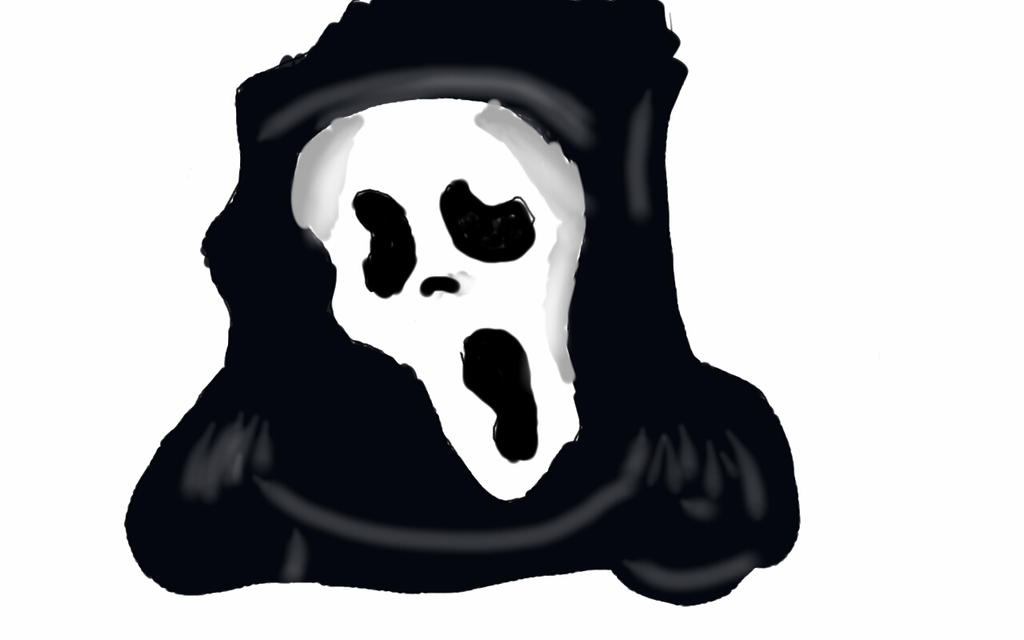
In this case, the reactions varied because the opening featured an antagonist distorting the traditional opening credits and theme song. Three kids reacted; so did about eight adults. While the adults' reactions varied from open-mouthed gaping to wide grins, the two kids at the end laughed at seeing what the antagonist had done.

Image source: http://img06.deviantart.net/5de3/i/2016/077/4/7/frases_de_gf___parte_1_by_djmusicandcartoons-d9vkc2m.jpg
 
"Where did these kids get their courage?" I wondered. "How come they're enjoying themselves when this is terrifying the older viewers?"

As a kid, everything scared me. I watched a lot of PBS since we didn't have cable, and mainly I preferred the cutesy or hilarious stuff on YouTube. My favorite shows included The Magic Schoolbus, Sailor Moon (the watered down dub that had synthesizer music), Arthur, The Jewel Riders, Batman: The Animated Series and Superman confused me, while Johnny Quest seemed too dark. A few late night commercials that featured people drowning gave me a fear of going on boats for a long time. Thus I wasn't a kid who would laugh at a hostile show takeover.


Image source: https://pixabay.com/static/uploads/photo/2015/05/28/20/19/child-788498_960_720.jpg

Charlie and the Chocolate Factory and a dark version of “The Three Little Pigs” were probably the only books I read that I laughed at while other people found terrifying, in part because the characters in both stories seemed to not realize they were in a morbid fairy tale. In fairy tales, characters receive rules like to stay on the path, be kind to strangers and offer your food, and use your brains to outwit evil. Within Willy Wonka’s factory, the children ignore direct instructions to not drink from a chocolate river or chew untested gum or attempt to snatch a squirrel, and the results are morbidly hilarious. Quick recap: the book, films and theater adaptations feature five kids and their parents going into a factory with sweets that defy traditional convention but also are made quite dangerously, and four of the kids end up suffering terrible fates because they try to mess with the factory's mechanisms.

As for the "Three Little Pigs," the version that we read in preschool involved the three pigs surviving and boiling the wolf for stew. The picture book illustration featured the pigs setting the dinner table, and preparing to dine on wolf meat and bread. It felt hilarious, and other versions didn't quite meet the same amount of karma with either the wolf simply getting boiled alive and two of the pigs eaten,
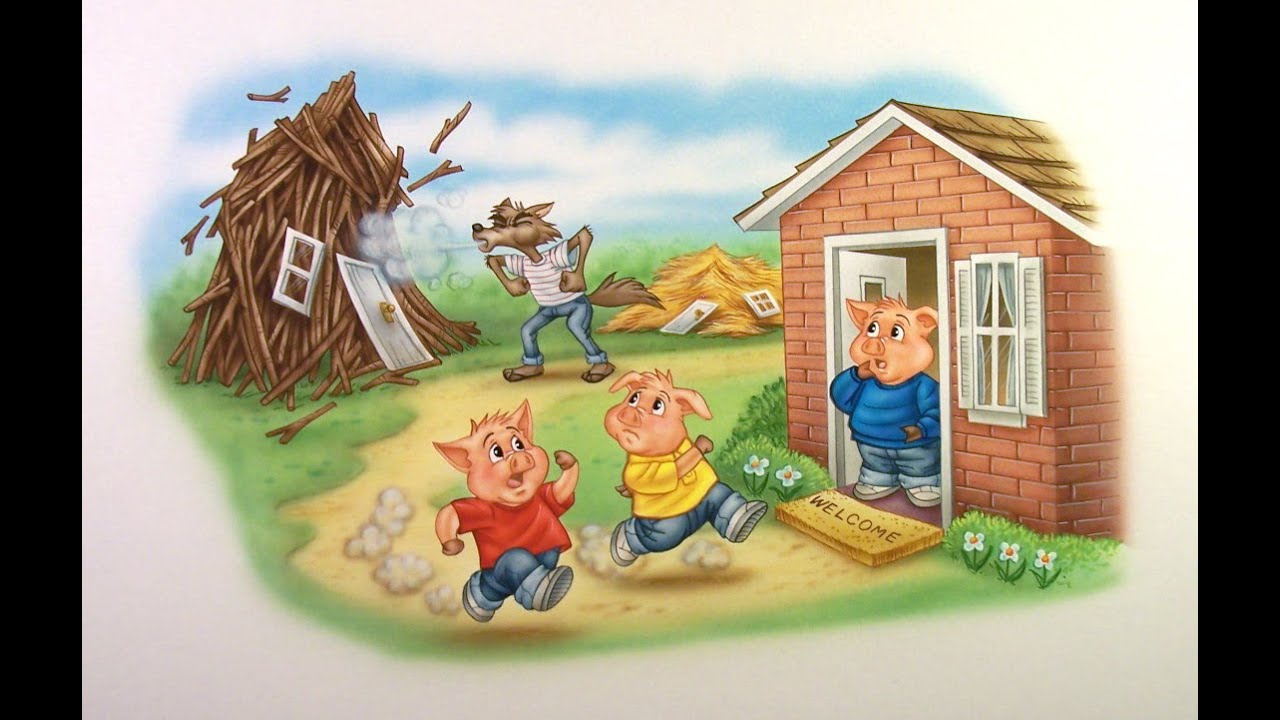
Image source: https://i.ytimg.com/vi/TP2L4ol3H_Y/maxresdefault.jpg

Fear is a conditioned response, that children learn from their environments. People may develop arachnophobia, for example, by witnessing their parents reacting to spiders with fear as the Eyewitness documentaries mention, or being trapped in the car with one as a child. Television taught me to fear drowning. The older we get, the stronger or weaker these fears become, depending on our experiences; learning to drive, for example, got rid of most of that fear of drowning, though watching Titanic still makes me anxious. I also become more scared when characters I like get hurt, because my empathy for them has increased with time.

Does this mean that kids who aren't scared of Gravity Falls do not perceive the same fears that adults do when watching the same material? It's possible, but it may also be possible that children can see a story as just a story, while adults know that people can and will get hurt in real life and see their fears reflected in an animated medium. An antagonist taking over the introductory credits implies that he can enter our world and change our reality, which can be nightmarish and a mind-screw. Having that in a "kid's show" adds to the fear, because it slips past the censors.

Image source: http://img14.deviantart.net/bd5e/i/2016/086/1/2/nightmare_by_johnvini-d9wneyf.jpg


In either case, I believe that we should nurture courage in children, because learning to be afraid of irrational things is just as bad as being afraid of reasonable dangers. It's better to laugh at the things than cannot happen, than to recall the things that can.

Friday, February 5, 2016

No Dark Ages: Surprise Power Outage


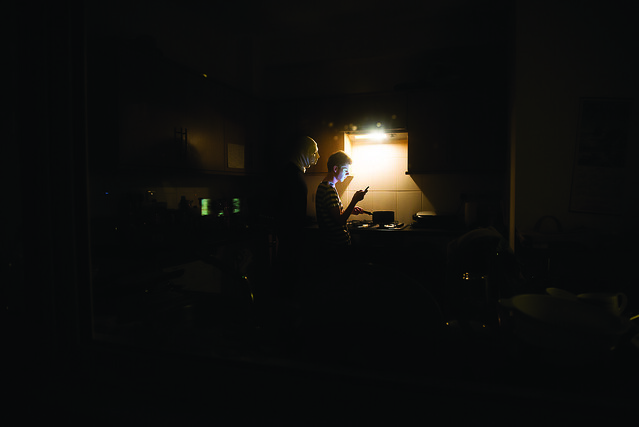
This was a picture I took of lighting a brand new candle in the dark, one I had planned to use for meditation. I took another photo of the candle in the light, when the power came back on. It brought me to mind of all the children's shows that claim that one can entertain in the dark, and find things to do when there is no power. Those shows emphasized the value of one's imagination.

Our neighbors next door have been building a new house, ideally to sell on the real estate market. They asked my mom in December if they could build a wall instead of a fence, and if they could take down our fence. She thought it was just going to be a small matter and agreed. If we had known what would ensue, she would have stood her ground and refused. As it turns out, they not only took down the fence without batting an eye, but also cut off our yard water, our Internet and phone for a couple of hours, and a few square feet off our property. Each time these incidents happened, my mom filed a report with the neighborhood committee, since they were quite a nuisance. The foreman seemed genuinely apologetic, but one incident after another occurred despite the apologies and our dwindling patience. We hoped the Internet would be an indicator that we wouldn't accept such nuisances.

Image source:https://i.ytimg.com/vi/TJSzuXsaGBI/hqdefault.jpg

A few weeks ago, while I was driving to a job interview in the morning, I got a phone call form my mom. It was nine in the morning, and the power was out in our house. She couldn't make coffee, or my younger brother's breakfast. Fortunately we had extra coffee in the fridge, and we had a propane stove for hurricane emergencies. She was able to make him breakfast, and heat up his lunch.

Thinking it was a power outage caused by the recent cold front, I called an FPL repairman, who came about six hours later, two hours after I arrived home. FPL is Florida Power and Light. The repairman had to call four more trucks, and they worked for about two hours to get a temporary cable up. That's right: temporary. No power outage had occurred. The construction workers next door had cut through our power lines while digging a trench for a wall. Such repairs would take at least two weeks, and in the meantime we have a long cable snaking around one side of the yard that covers our power. The foreman next door apologized, again, and he promised that the repair costs would be covered by them, but my mom and I don't trust him. This was the fourth time that such an incident had happened, all because my mom gave permission for them to build a wall on the property line.

This was the other photo I took, of when the lights came back on

Not having power for a day is awful in this day and age, not just because we lose the "entertainment" that comes from television and video games, but also because you lose the electricity needed for cooking, maintaining the house, and running the schedule. My younger brother has severe allergies, so my mom has to cook all of his food from scratch; cooking on a propane stove was more laborious for her given it's smaller than our electric stove and could have burned her. I wouldn't be able to send our my stories to magazines, share them with friends, or email my resume to potential recruiters. We had to cancel a cleaning service that was supposed to come and put off evening activities such as running laps around the driveway. Because of the cable, we cannot mow our lawn and have to take care not to step on it or drove on it. A power outage from a storm is one thing; that sort of event has a risk of happening. A neighbor cutting off your power and not realizing until you leave a voicemail detailing the situation could have taken more care.

I am certainly more appreciate of power in my life after every outage, because it's a necessity for our household. Certainly I have learned from this that when someone tries to make a cagey deal and starts creating disturbances to face them head on and refuse to accept their nonsense. My mom deserved better than this.

Image source: https://c1.staticflickr.com/5/4061/4573678142_4b0aa216ce_z.jpg

Thursday, December 17, 2015

Undertale's Moral Dilemma: Love and Experience


 During finals,  while writing two take-homes, I came across a playthrough of the game Undertale. The game made for some interesting white noise as I typed discussions on topics on international business and marketing. The game stirred a lot of feelings in me -- anxiety, anticipation, heartbreak, and disbelief. What stirred the biggest disbelief is that people would consider being cruel in it.

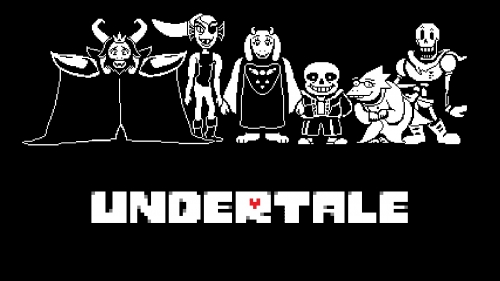
Undertale follows the adventures of a child that falls into an underground world full of monsters and human remains. Monsters tend to hunt down humans out of fear, and the player character has to decide if they want to fight back or attempt to spare their attackers. One can either be a pacifist, a self-defending neutral character, or a serial murderer. A heartbreaking past haunts your playthrough, and all your past actions come into play if you decide to reset.


Image source: https://farm1.staticflickr.com/664/22406836197_e8219bc729_o_d.jpg


I had previously seen Undertale fanart of Sans, Papyrus and Frisk on my Tumblr, mainly involving bad puns and shipping with the game's goat-mom, Toriel. Aside from some character designs, I had no idea what the game was about. I started watching Markiplier's playthrough, got scared by Flowey, and started reading up on the details, including who the characters were. Then I started editing the Undertale page on TVTropes. The game gripped me, to the point where I wished that our class case studies involved the game since I could justify my disorganized thoughts. Obsession with the game's potential for violence grabbed me, especially as I watched the true pacifist run and dramatic boss fights.

Unlike most games, Undertale asks how much responsibility a player character has for taking another life. In a traditional game like Super Mario Bros., you have to kill the tortoises and Goombas because otherwise they will kill you, and in an RPG, as Flowey callously puts it, "It's kill or be killed". You have a choice to spare the monsters, and to even hear them out. On a Pacifist Run one can bond with all the characters, the way Aang from Avatar the Last Airbender or Wander from Wander Over Yonder does. You get to make them happy, to cheer up sad ghosts and imbue shy scientists with confidence about their crushes. You get to comfort those who believe they're beyond comforting. Markiplier during his run asks, "Why would anyone want to kill these monsters? They're cute!"

Image source: https://farm6.staticflickr.com/5691/22963006849_899560c75b_z_d.jpg

That question makes me agonize over the more violent runs of the game. The genocide run is the run where you, the player character, decide to kill all the monsters, regardless of their threat level, and its existence freaks me out. Cuteness of the monsters aside, by logic you get a happier ending if you don't fight.

Why does it scare me? First, the fact that the game assumes that a player would be that callous. As mentioned before, one could technically do a similar run in Pokemon, counter-intuitive as it would be to make every wild Pokemon faint and not capture any, but the game wouldn't call you out for it, any more than Minecraft would call you out for hunting down digital spiders and octopi. Jacksepticeye as of now is doing a genocide run, undoing the happy ending he's provided for his characters, since his viewers have requested such a thing. I cannot believe that so many people would ask that, to disassociate from these three-dimensional characters that have to fight tooth and nail for their happiness.


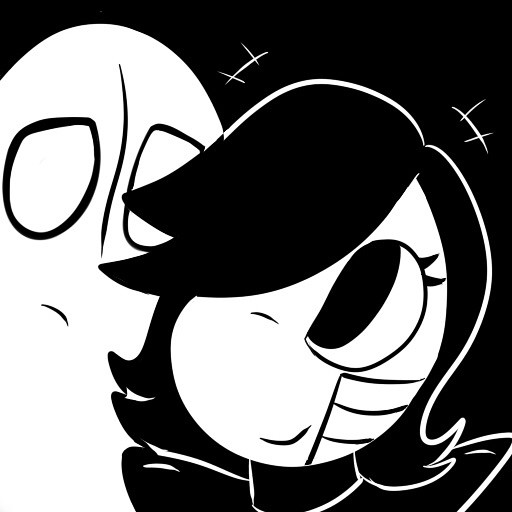
The ghost on the right is always sad but you can cheer him up.
Image source: https://farm1.staticflickr.com/621/23302619036_259bcbe8dc_z_d.jpg
Second, the acknowledgement that players can be so violent calls too much to the real world. I prefer to play games and read stories that have an escapist sense, where we can be someone else and while we might learn something like history, mathematics, character development or logic -- I grew up on edutainment gaming like Jump Start and Carmen Sandiego-- we don't get severe wake up calls or tragic endings. Oftentimes the player has to resort to violence out of necessity, say in Minecraft if archers shoot and zombies walk, but in edutainment games the worst that one could do was blow up an asteroid aimed at a satellite, or feed a hungry plant monster a chemical sedative. When I read the news, actions have consequences. Our hateful words echo across the Internet and television far more strongly than our positive words do, and our more extreme sentiments can lead to massive tragedies. Children often suffer in the crossfire, and people often reduce victims to statements, or to blemishes on a seemingly perfect landscape. Seeing these attitudes reflected in a fantasy world, where we have more free agency to act as a human being, for better or for worse, hits too close to home.

Third, the varying endings that resort from the player characters' choices unsettle me, in their degree of happiness or tragedy. Most of the edutainment games that I played, unless they were for kindergarten for first grade, had a very linear progression, in that one has to complete a set of activities to get the rest of the story and cannot deviate from the set path. When you have critical choices in a game, as you do in life, choices become paralyzing, more so when one sees the consequences of bad ones. Undertale's player character if he or she wants to progress cannot stay with goat-mom Toriel and eat butterscotch pie with her, any more than one can stay in Mettaton's hotel or in the Temmie village. Yet to go forward comes with its risks, of defying Toriel to leave her, of finding yourself with monster blood on your hands, or dust as it were. You can either break a lot of hearts, or kill a lot of monsters.

When you want a scene to break your heart . . .
 Image source: https://farm1.staticflickr.com/762/23080868053_f2a402a280_z_d.jpg

Undertale is phenomenal  and yet devastating in how it asks gamers, atypical or not, to shed typical gaming behavior. A game had to ask those questions at some point, at what a person would do if they have the option to play without fighting. I hope that if I do play a game, however, that watching a Pacifist run will not hinder me from diving into a new world, to gain  more experience.

Monday, November 30, 2015

"But I Don't Want to Say Goodbye to Gravity Falls"

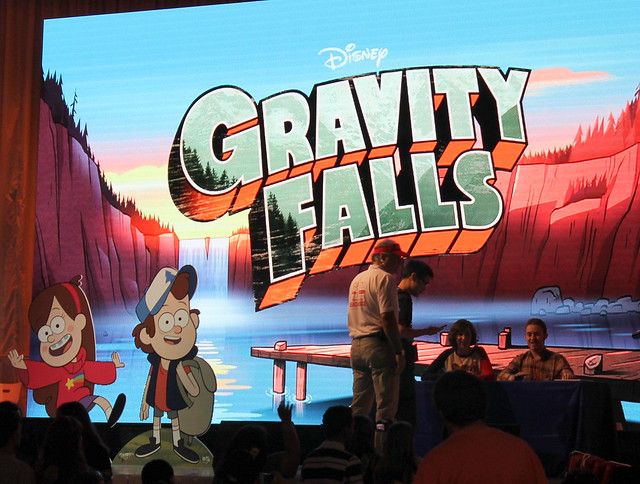
I have to confess something: I'm a huge Gravity Falls fan. Gravity Falls is a traditionally animated show on the Disney Channel about two twins, Dipper and Mabel, who spend the summer with their charlatan great-uncle and discover strange creatures in his tourist trap town. At first starting with slice of life episodes, in which the twins encounter ghosts, gnomes, mermaids, and even a cherub, the series has taken a darker turn with new characters in the second season. Currently the season two finale has been taking place over second episodes, in which the show's world has turned upside down.

Several weeks ago the show creator, Alex Hirsch has announced that after the season two finale, Gravity Falls will end. Within the show, summer will come to an end, and Dipper and Mabel Pines will have grown up. This came as a shock, as the season finale has pretty much destroyed the world so far and pushed the main characters to their limits, raising the physical and emotional stakes. We have a vast amount of questions that require answers, as well as multiple unresolved plot-lines. Hirsch has three episodes to handle a vast amount of material, while not telling us how the world will change from a near apocalypse.


 Image source: https://farm4.staticflickr.com/3697/11764975265_92a79e4354_z_d.jpg

Before Gravity Falls, the best Disney show on the air was Phineas and Ferb. While the show is brilliant with the references and storytelling, it relies on a rather straightforward and almost predictable formula. In addition, it operates on strange logic at times, has animation that at one point is lampooned as MC Escher-derived and romanticizes the notion that one can do so much during summer and winter vacation. The format feels very limited, and the best characters were the ones who didn't speak. It takes one a long while to get used to that show, and to its zany sense of adventure.

When it comes to animated shows, Disney's Golden Age from the 1990s spoiled me; the humor and fluid animation from shows like Chip 'N Dale, DuckTales, Darkwing Duck, Bonkers, and others had me accept high standards for their successors. A new show would have to wow me with an awesome opening or preview. I caught one or two episodes of Gravity Falls, and they seemed to be heavy-handed in telling morals: don't change an aspect of yourself just because others are making fun of it, and don't cheat at mini-golf even if your opponent is nasty.

Image source: https://farm3.staticflickr.com/2849/9000760849_4d2e385e0b_z_d.jpg

Then I saw the season one finale; it won me over with an epic fight scene and important character development. Tumblr also screen-capped some of the show's best moments, including a deconstruction of the "friend zone". I started to watch more season two episodes, including one that hit very close to home for someone with an introverted personality, and I started watching episodes on the days that they premiered. Slowly, with each standalone story-line, I got into the show, and started working out to it. A few fanfiction pieces are even saved on my digital clouds.

When the first big hiatus ended in the spring, Gravity Falls no longer became a weird slice of life series with a big mystery; it became a large tragedy. The episode that changed this dynamic, "A Tale of Two Stans," introduced a character who understands how the weird Gravity Falls logic works, and has even found possible explanations for it. We also see a family torn apart, a sobering reality in this day and age, and fears of the past repeating itself with future generations. This character has made the world of Gravity Falls bigger, more complicated, more fascinating, and more dangerous. He talks about the future, or the lack of one.

Image source: https://farm3.staticflickr.com/2815/9000750181_03cdf7643b_z_d.jpg

With all of that material, that emotional investment, that fanbase that can be delightfully divisive when debating over the main characters' selfishness or morality, just how can we say goodbye? It feels like we've only gotten started. A lot of Chekhov's Guns have gone unused, and the characters have to figure out how they've changed now that the world has ended.  Yet we have to accept that the story ends with summer, and with quite a few ramifications. 

Good shows do have endings; Avatar's two series had wonderful finales. The fact that Alex Hirsch announced this right as season two is ending, however, feels like a shot to the heart. It would have been one thing if he had told us at the season premiere, so that we could brace ourselves to say goodbye, the way we prepare to say goodbye when a dear friend or family member moves away. Instead we have gotten the announcement that a friend has to leave on an emergency red eye, and we can't even see him off at the airport.

Image source: https://farm1.staticflickr.com/549/18859415488_fa603d8d9e_z_d.jpg

With that said, I cannot thank Alex Hirsch enough for the ride. He restored my faith in the Disney animation block, so that I've discovered other shows like Wander Over Yonder and Star Vs. the Forces of Evil. He wrote a good story, and one that has been rewarding thus far. Thank you for your imagination, brains, and willingness to relive childhood.

Friday, October 2, 2015

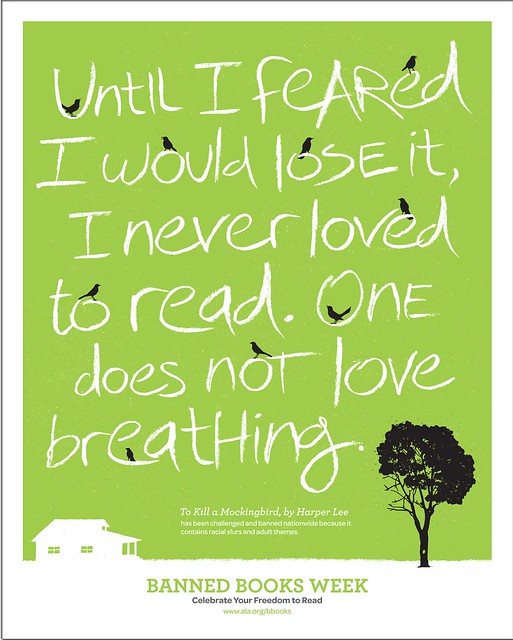
Banned Books Week: The Awkward Questions

"But who is wurs shod, than the shoemakers wyfe, With shops full of newe shapen shoes all hir lyfe?"
[1546 J. Heywood Dialogue of Proverbs i. xi. E1V]"


Image source: https://farm2.staticflickr.com/1117/974784929_eaa0084e40_o_d.jpg
Before I turned thirteen, I thought that book censorship happened to other kids in other places, and that it wouldn't be tolerated in this day and age-- the early 2000s. Harry Potter book burnings seemed absurd, to think that witchcraft in this day and age posed a threat, not to mention anonymous callers harassing Judy Blume for writing a middle grade book about the existence of God and how a preteen could choose a religion.


My family is highly educated, and I inherited my brother's taste in books, from Harry Potter to Artemis Fowl to Ender's Game.He in fact had to push books on me because as a kid I didn't realize that books could be fun. I was a reluctant reader, until I discovered the joy that Redwall and Harry Potter brought, and more so when I learned that you could take multiple computer tests on the books that you read in school. It seemed all fun when I won an award for reading the most books in the school, and for discovering the power of Bruce Coville when it came to unicorns and dragons.


Image source: https://farm9.staticflickr.com/8693/16841703100_5e046cd11a_z_d.jpg

Then I hit middle school, and discovered Harry Potter fanfiction without ratings, Neil Gaiman through Sandman trade paperbacks, and adult renditions of fairy tales. The latter anthologies that made me do double takes at the violence, and some interpretations of the fairy tales that I read with bright illustrations. Some of the phrases that evaded me made me doubt that such acts existed, that it could not possibly be what I was asking.


I asked my sister an awkward question while we were uniform shopping. She explained to me the answer, with some patience, and told me to not ask so loudly. I expressed some disgust when she told me the definition of the term, and later on she and my brother started to screen the books I read, not allowing me to read volume 6 of Sandman due to the graphic violence portrayed during the French Revolution. My mother freaked when I mentioned some ridiculous notions about Wonder Woman that psychologist Frederick Wertham had made about a female superhero that has a lot of female sidekicks, and confiscated my Internet privileges. This confiscation felt very insulting and violated the education that I had learned about censorship.


Image source: https://farm9.staticflickr.com/8173/8028481330_c5aaeca3d0_z_d.jpg

A painful transition over several years followed, where I started to believe that certain books can spark dangerous and unhealthy ideas, and that dark fiction inspired terrible thoughts to high school students under a lot of stress. I stopped reading fanfiction because Fanfiction.net at the time downloaded a lot of viruses to the family desktop I was using, and the actual Harry Potter books coming out nullified my need for more wizard lore. In time, I asked about more mundane things like how to survive high school and broken friendships. My reading diverged into more traditional fantasy and science fiction, from Isaac Asimov to Scott Westerfeld, and to this day I find it hard to read traditional romance novels or gore fests, unless Shakespeare or Stephen King write the gore or Meg Cabot writes the romance.


As an adult, I now understand the position in which I put my sister. Having to answer a young teenager's awkward questions in a public place or in a conservative household makes for an unpleasant experience. Often censored books make people ask questions, and too many questions makes one reluctant to confront them, especially when the answer seems to absurd to be believed. As a kid I had no filter, so I was curious about everything.


Image source: https://farm6.staticflickr.com/5474/9454509652_4fa5840656_z_d.jpg

With that said, questioning the world and its fictional representations allows our minds to grow. Harry Potter's detractors in the 1990s claim that the book promotes witchcraft, completely missing the point that despite the wizards and witches having magic to solve the energy crisis and problems of our world, and they cannot overcome the human errors of prejudice and tolerance for cruelty. Parent Melanie MacDonald calling a young adult novel "smut" for addressing the serious issues of bullying among girls shows a lack of perception that such issues occur, often under an unwilling public's nose.


Education starts in the home, and I imagine biases and handling awkwardness comes into play when trying to nurture a child's mind. While my family screened the books I read, they didn't impose that screening on other children or parents, or by complaining to libraries. They knew their comfort zone, and mine, but comfort zones vary with each family. For that I am grateful, and I am grateful for having the ability to question my world, and its absurdities.


Image source: https://farm8.staticflickr.com/7575/15901032146_df36385ca9_z_d.jpg


Monday, September 7, 2015

Weekend Trip to Disney

Hi all! I’m back from a two-day trip to Walt Disney World in Orlando. We drove out Friday afternoon and arrived in Miami yesterday evening. The two days in between were quite adventurous.  
We haven’t been to Disney World since 2011, when we stayed in Bay Lake Tower and learned how Disney is accommodating to special allergies and dietary needs for my younger brother. This was going to be fun, short, and sweet. And it all was. On top of that, I smuggled in my Hiccup doll for comfort from the packing stress and the road, and to indulge in the subversive nature of bringing a Dreamworks character to a Disney franchise.  


Hiccup enjoyed himself, I can tell you that. So did we. So much has changed in Disney over the past five years. A few rides, like Snow White’s Scary Adventures, have vanished and been replaced by a Princess Fairytale Hall where you can meet and greet the ladies of Disney. We didn’t go on the new Snow White ride, Mine Train, because the waiting times were between 40 and 60 minutes, but it certainly looked interesting. Fare thee well, Snow White; I wished I had ridden you more often before your 2012 closure. 
On the first day, we went to Epcot, which remained mostly the same as it was in 2011. Spaceship Earth is still the most soothing ride, and my mom’s favorite experience was going on Soarin’. The large globe is soothing to see at night, though the walking between rides and Via Napoli wore us out. I actually fell asleep on my brother after we boarded the Monorail back to our hotel room.


On Saturday and Sunday, we went to the Magic Kingdom. The park is decorated in full for Halloween, even with a month to go before Mickey’s Not-So-Scary Halloween Party. It certainly gives a delicious air to the fall atmosphere. The people dancing around trolleys and singing about hayrides also helped.


The new ride that I loved the most was The Little Mermaid ride. I saw a 3D blueprint of the ride on my Little Mermaid DVD, and was excited to get a chance to go on it. The animatronics were very sophisticated, with the audio matched closely to the lip synching, and there was an extended sequence depicting “Under the Sea” with Sebastian the crab conducting.
With that said, they do cut out the Lovecraftian climax towards the end where Ursula gets angry and takes over the oceans, but I figured that’s a small allowance to make in favor of an actual Little Mermaid dark ride. This took twenty years into the making. The queue was also entertaining, with an animatronic Scuttle providing commentary and a sea-like backdrop.


We also went on Splash and Thunder Mountain; I was terrified of going on the rides as a kid, when we used to go to Disney more often, but I managed to swallow my fear and go on the drops. After all the stress of the past three years, an amusement park ride that relies on our fear of falling felt like a walk in the park. Plus, I can make up for the times as a kid that I freaked out and refused to get on, requiring my mom to wait with me outside the ride.
 On the second day, I took Hiccup with me to the Magic Kingdom. He got a glimpse of Cinderella’s castle, which is undergoing renovations. I found it wicked to sneak in my favorite Dreamworks character into the Happiest Place on Earth (fanfiction material). He sat with me on Space Mountain, and no one noticed. It was hard to take a photo of him in the dark, but I managed. Space Mountain was pure darkness, so I was relieved to have a comforting character with me.


We also went on the Carousel of Progress (which will remain a classic), Small World (ditto), and the Haunted Mansion. I love the ghost host outfits that the cast members wear and asked where I could get one. A cast member told me that the nearby shops sold a t-shirt, but I want to go for the full Victorian dress. I also got flashbacks when a frightened child said he didn’t want to go on; I was the same way about Pirates of the Caribbean. Jay and Mom remember that, and how I would always say, “NO yo-ho!” On the bright side, the ride was as fun as I remember, with a few updates; Leota’s head does more floating, I actually saw the Black Widow bride, and the tombstones were hilarious as always.
Overall it was a fun trip. I enjoyed myself, as did the family. Hiccup also got a chance to see my childhood and enter a place forbidden to him; the security guard that checked my bag didn’t even recognize him. I got to be a proper kid again, with some cynicism about progress and yet less adult worries on hand. In the Magic Kingdom, you can shut most of the real world out, and get lost in the atmosphere.
 

Wednesday, June 17, 2015

The Crime of Ideas: When Stories Touch A Nerve

In my last post, I talked about having stories that served as embarrassing dandelions, material that can embarrass the author. This post will be about the opposite-- stories that offend readers.


I believe that authors should not be censored, on a local, national or international basis. Each year I participate in Banned Books Week, and read about the books never purchased or bought. When you suppress words, you are smothering a sprout of story that demands a patch of sunlight and adequate watering.


Image source: https://farm4.staticflickr.com/3082/2358154067_4a125c57d1_z_d.jpg?zz=1


Despite this logic, governments continue to oppress those words, especially those with religious freedom laws. This year, for example, the Iranian government has imprisoned a cartoonist named Atena Farghadani for drawing the Iranian parliament as animals, and there's an online campaign to remit her sentence of twelve years imprisonment. 20-year old English major Tara Schultz in California wants four graphic novels eradicated from her university's curriculum, and Neil Gaiman has posted about the situation.


Despite my disgust for people that cannot handle stories or art that challenge them, I have found my open mind challenged by one online genre: creepypastas. Creepypasta are the Internet's form of spooky campfire tales, posted on the main website. As Matt Anderson explained it to me, "the Creepypasta wiki is just a hub of tales . . . [Creepypasta] started in imageboard sites, and forums. The idea was, you could write something, then post it somewhere. If it was good, someone would Copy it, and Paste it. Hence copying it and moving it all around the board. It's related to copypasta. But it's the scary-themed version. Hence, creepypasta."

Image source: https://farm8.staticflickr.com/7531/15936360096_d06da45f96_z_d.jpg

 There's an entire web collection of these horror tales online, and they rarely get taken down. Often the tales rely on digging up a grain of truth and expanding on the grain to create willing suspension of belief. The hits are the stories that manage the blend of truth and fiction almost seamlessly, like "Candle Cove" by Kris Straub. The misses have a blog on their own, with snarky commentary in the comments.


Some of the myths involving media are quite laughable when they involve copyrighted work; I laughed when I read "Abandoned by Disney," for example, because while Disney has abandoned its fair share of resorts and parks (RIP, River Country Safari), they would never design a theme park centered around the animated adaptation of The Jungle Book with the cast members dressed in loincloths. Also, cast members are not called "mascots" and generally people from India do not wear loincloths if they can help it. Although the writer had done some research, the leaps of credibility he made were quite astounding.

Image source: https://farm9.staticflickr.com/8110/8537945324_6820fd6886_z_d.jpg

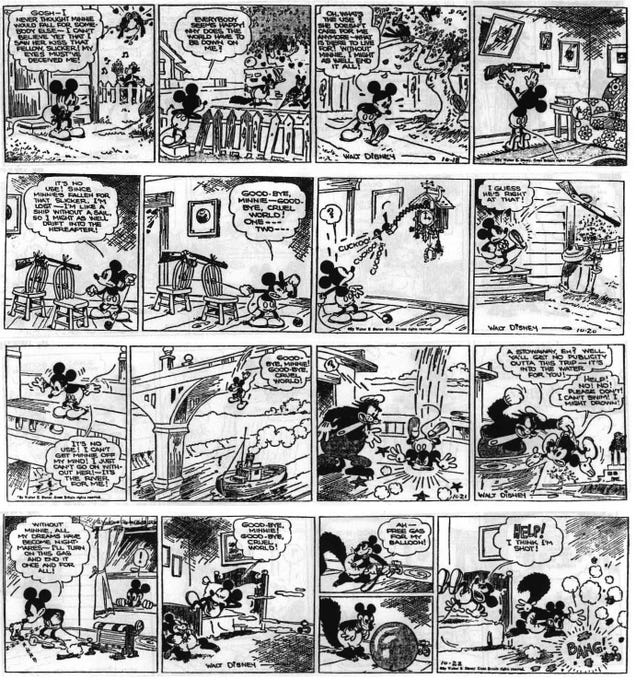
Before I came across "Abandoned by Disney," I came across "Suicide Mouse," which also made me look at the story with a rather dubious expression. "Suicide Mouse" is a description of a "lost" Mickey Mouse cartoon that features black and white animation, creepy music, and the backgrounds going nuts. Although the video recreation is creepy (no it's NOT a real cartoon), this legend actually insulted me because Disney is rather open about their earlier dark cartoons, like "The Mad Doctor" and "Pluto's Judgment Day" and the animators were very concerned with creating quality animation. In addition, there were a series of comic strips where Mickey Mouse was suicidal, and it's easily found online. It goes to follow that if "Suicide Mouse" were real that Disney fans would've found it ages ago, long before the twenty-first century. 

A few months later, piqued by curiosity, I read some other Lost Episodes, to see if they were as inaccurate as “Suicide Mouse.” Most of them were; the only one that could be plausible was a dark take on a “Tom and Jerry” cartoon. The writers seemed to use copyrighted works as a mean of evoking cheap thrills by using established characters that people knew and loved. This was explained as "corrupting innocence," and the scares lay in messing up nostalgia for older generations. I found this logic stupid because, as mentioned, a LOT of kids' shows have dark elements to them that the Lost Episodes don't address.
This is a real cartoon.
 Image source: http://i.kinja-img.com/gawker-media/image/upload/s--nMZZTYDT--/c_fit,fl_progressive,q_80,w_636/17qlhip75dyffjpg.jpg


Then I found one for Arthur, the PBS kid’s show. that was beyond violent and depressing, and way beyond the original spirit of the show. I got even angrier when I saw one that postulated that The Magic School Bus, another PBS show that is about teaching kids science, would have originally been an animated horror anthology and talked about a pilot episode set in Soviet Russia.


My kneejerk reaction was, "Seriously? How dare you! How dare you write such a story? Did you even watch the show?"


Image source: https://farm9.staticflickr.com/8301/8010057261_7f119cbec6_z_d.jpg


Why did I get angry? Because I watched a lot of PBS episodes as a kid. Magic School Bus was one of the shows that got me into science, as a matter of fact, and taught me how the world worked; its scary bits, mainly in the space episodes, created lasting phobias about asteroids and supernova. Before Arthur’s episodes lost quality over time, they captured an optimism about the world and stark reality about how no person is likable all the time, even if they’re the main character.


Obviously, I didn’t raise a public fuss about my taking offense. I didn’t write to the authors and ask how could they write such a thing, if they knew the first thing about how scary the shows could be. That sort of behavior isn’t nice, and the stories had already been written. I make it a point to not discourage young or anonymous writers from their work, since we all have a learning curve to work with, and just utter nothing when I cannot say a nice word.

Image source: https://farm1.staticflickr.com/22/24249991_e405a895fb_z_d.jpg
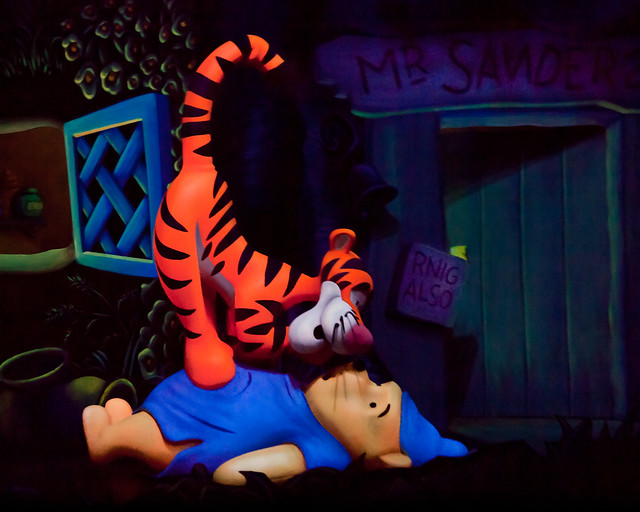
Then I discouraged Matt Anderson when he suggested hypothetically doing a Lost Episode for Winnie the Pooh. I didn’t even let him finish his idea when he pitched it to me; I just said, “No. NO. Pooh Bear is off limits!” I felt bad afterward, but the feelings remain.


That has been the only time I have ever told someone I liked to not write a story, and that was because the idea touched a nerve. It’s the same problem with the other Lost Episodes: the Pooh Bear franchise has its share of horrors that a Lost Episode would never touch upon, like the Heffalumps and Woozles sequence or the monster Crud from the 1990s show. Any corruption of Christopher Robin, who did have  a rather interesting life in the real world, would feel wrong, worse than the 2010 movie.


Image source: https://farm5.staticflickr.com/4043/4480010473_7e1aceebeb_z_d.jpg


This exchange has made me wonder if I’m any different from the moral guardians that would arrest a cartoonist for making fun of them, or if censorship always starts with a spark of anger at the offender. Do we merely have to realize that our knee-jerk reactions are personal  to stop enabling censorship to happen? Could such a solution be that simple?


Perhaps anger fuels all violent oppression of ideas, which is why the European governments put books like Ulysses on trial, why school districts fire librarians for purchasing “immoral” books and why a 20-year old English major protested about books in a course she could have dropped if she had checked the syllabus. The trick is that we have to realize when our reactions are emotional rather than logical, and behave maturely. That is, that instead of oppressing the authors for putting terrible phrases and ideas in the world, that we let the ideas wash over us, and allow them to make waves on the beach. Then we pick up where we left off and turn our anger into creative storytelling.


Image source: https://farm4.staticflickr.com/3196/2326873674_433d92bb25_z_d.jpg


I’m not going to discourage any more Lost Episode stories, but I hope that by contributing to the genre and writing a better original story than what’s on the Creepypasta Wiki, that I’ll add material that compensates for the disgust and outrage. Instead of smothering an idea and letting it die, I’m going to nurture it another way, with actual knowledge of how an original show works and what the original spirit is , and see where it goes from there.

Also, don’t forget to support Atena Farghadani. Keep ideas alive, and ignore the extremists like the Revolutionary Guard and shameless young ingenues like Tara Schultz. Obviously writers and artists do not deserve jail time for writing a terrible or offensive work. At the most they deserve thinking time, to improve on their tales and to learn from their mistakes. I know that I’m going to be thinking a lot on how to write a better story than a twisted take on genuinely terrifying children’s shows, and to leave readers with a satisfied taste in their mouths.