Sunday, July 11, 2010

A lot of Yackum

You learn a lot from rereading first drafts. And second drafts and third drafts too, for that matter. Rereading "Murder in Panel Five," a satire on the typical Agatha Christie mystery, I've discovered a lot of what we call yackum.

"Yackum," aka "rambling," aka "unnecessary nonsense," becomes the vice of all writers when slogging through draft 1 of an unpublished short story. Novelists can get away with yackum, especially if they are literary elephants like Stephen King or J.K. Rowling, but short story writers do not have that luxury. Unlike novelists, who experiment with their medium to the point of exasperating us readers, the short story writer has to tell a story. Period.

Types of yackum to look out for:

1) Dialogue- Usually worse in novels, but unnecessary or flat dialogue must go. If it sounds false? Cut it. If it has one word off and the word can't be removed? Cut it. Characters put the "yak" in "yackum".

2) Inner Dialogue- Even worse than outer dialogue because it occurs in the character's head. Aka Rambling for God Knows How Long, especially in a mystery. Show your character's reaction, don't have them say it. Yak in yackum, folks!

3) Description- Hairier than dialogue, but rely on your ear for this one. If you read at an open mic, you'll trim on the fly to avoid being cut off in the middle. You want concise and lyrical sentences. And if you have even one paragraph (four sentences) waxing on, the editor will probably slap your manuscript. Here you can break the dialogue rule and have other characters judge your protagonist, or each other, as long as you keep it concise and clear.

Have fun!

Friday, July 2, 2010

Great Literary MacGuffins: Titles to Examine

Since in an earlier blog post I talked about Literary MacGuffins that should be the title of your story, why don't we take a look at some classic Literary MacGuffins:


We read this novel in gifted 4th grade, listening to audio tape, as mentioned before; I finished it ahead of everyone else and mispronounced "sadist" for several days until our teacher put it on our vocabulary list. In a nutshell: Meg, the protagonist, goes on a journey with her precocious brother Charles Wallace and  schoolmate Calvin to rescue her father from another planet with the help of Ms. Whatsit, Ms. Who and Ms. Which, three strange ethereal beings.  
First, the title "A Wrinkle in Time" refers to a new term called a tesseract, which is indeed such a wrinkle. The tesseract links the book together because the three "witches" in the story use the tesseract to travel through time and space, and a mishap with a tesseract starts the book by taking away Meg's father. Makes sense, no?
And since we're talking about Madeline L'Engle, may I say rest in peace, since she died in 2007, and thank you for writing such a wonderful book.

Monday, June 28, 2010

The Importance of Reading Your Work Aloud

We hear this tip all the time if we write. It may be the most crucial tip . . .

And I didn't listen for about five years. I read other people's work aloud, especially poems that rhymed, and I read out my own stuff when I got the chance, but in terms of performing I tend to get in over my head. Reading out loud to others? Definitely. Reading out loud to myself? NEVER.

Why this negativity? It stemmed from when I entered a gifted program where we followed books on audiotape. With respect to my Language Arts teacher, since in his class I learned to love reading and developed my love for horror, audio works didn't work for me. For one thing, I could read faster than I could listen to the stuff; I finished A Wrinkle in Time five days ahead of schedule. For another, I believed in characters having different voices; now I know that the speaker's quality is much more important. If you have two voices doing about ten characters, you were dead to me as a fourth and fifth grader.

But now, having received about a hundred rejections total for all the work I have, and writing poetry for class, a habit I haven't kept unfortunately, I've realized how important word flow needs to sound. We may see the letters on paper, but we also have to hear them. And if your readers even in the classroom don't laugh when you want them to, then something is wrong with the words, not with their hearing.

Even better, reading aloud will give each of our characters a voice. Neil Gaiman at Mouse Circus gives the Man Jack a terrifying growl, while the Sleer truly comes off as a smoky creature. When I read aloud a piece with a supervillain, I gave the villain a maudlin British accent, which helped him appear even goofier.

In the case of a novel, individual voices are necessary for a novel where every character gets a say. Not just the villains and the heroes, but the anti-heroes, the helpers, the thugs, and minor people who steal the show. Democracy has a price, but it gives our novel strength.

Thursday, June 17, 2010

Serial Titling: The Real Condensation Begins

Let the record stand that titling stories and naming characters are one of the most unpredictable events in terms of difficulty; sometimes it's easy as pie, as any author can tell you. Sometimes a character will come fully formed to your head, as what happened to J.K. Rowling on a train, but sometimes they just remain in the story like square gears that you can't really fit in. Or they're wood and the rest of the story is metal. Weird stuff like that happens.

With titles, though, you encompass all of your story's elements into a few words. Not all writers try to do this; for younger audiences, the titles might be more concrete (The Berenstein Bears And Too Much Vacation), but as you go into the scholarly set, people want clever titles with meaning. 

Most often, the title centers on the object mentioned in the title, whether it's a person, or a significant object. We call this the literary MacGuffin, because we, the reader, want to find out who or what the thing mentioned in the title is. (Macguffin: object that protagonists in a story want. The literary MacGuffin is something that the readers want.) In fact, Wendelin Van Draanen wrote two Sammy Keyes books when these MacGuffins popped up as titles, and she wrote to find out what the Sisters of Mercy and a Runaway Elf were respectively. Another great example is Harry Potter and the Prisoner of Azkaban, since Sirius Black, the title prisoner, is an integral character that the whole world is searching for. 

This strategy doesn't always work, however, because your literary MacGuffin might be cliched. If your book has a lot of MacGuffins, then you have to pick the one that encompasses the story the most. My whole story is about Magic Turning into Memories, but that title doesn't have the zing I'm looking for since magic is a necessary staple of fantasy novels and memories is a huge mouthful. So what is an author to do?

The solution is to make the theme sound less cliched. So I need to find apt synonyms for magic and memories respectively. Either that or use the theme of Midsummer and Snow, or something off about the woods, since all of these appear in the book. Hey, it might happen.

Sunday, June 13, 2010

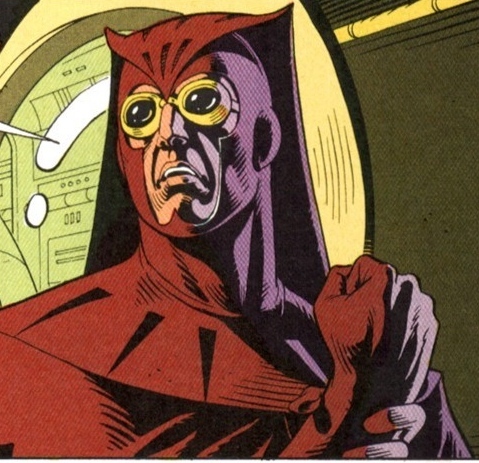
The Night Owl is Really a Cuckoo


As a writer trying to balance schoolwork with cartooning and possibly revisions, I have come across a rather exotic species, one that is worth keeping if one has the money and time. But as I have neither, I warn everyone else who is reading this blog: the night owl is not your friend.

See, the night owl is looking for only thing: your time. And if that time happens to be at night and you are a morning person and you're not used to taking naps, you a
re going to be very grumpy. You don't even hear him coming in because he uses the back door, with all his specialized gadgets. But if you do see him, he wears this cunning disguise:


Do not be fooled by this gentle exterior, diurnal writers. Anyone will tell you in the wake of the Harry Potter craze that owls are not the gentle messengers that will nibble your fingers fondly. They are expensive, noisy, and fussy And the night owl's true face looks like this:


And to be honest, you can't trust a guy who dresses up like an owl unless you know he has a teenage sidekick and that he's mean because he really cares about everyone except the psychopaths that killed his other sidekicks- oh wait, I'm thinking of BATS! Silly me!

If you DO have the money, you DO have the time, then you can make the night owl a rat sandwich. But tonight I'm closing my window and hope that he doesn't have lockpicks . . .

Sunday, June 6, 2010

Balancing Cartooning with Writing

Things I have learned over the past two weeks:
1)Don't let the night owl routine dominate you; find the time to write, NO MATTER WHAT.
2) Don't get stressed, or everyone will hate you.
3) Biology is never easy, so always study.
4) Do a little bit every day, just to salvage your sanity. 

Wednesday, March 24, 2010

The Individual and comedy

My older sister and brother are Gordon Korman fans. They love his early, zany books like the Macdonald Hall series, Losing Joe's Place, and Don't Care High, while ignoring (most) of his newer stuff. D (the sister) mentioned that the most recent Korman book that she read, Schooled, was good, but not a "pure" comedy, which Korman excelled at while in high school.

Well, duh. I read and finished the book last night, and it was EXCELLENT because it was about a homeschooled idealist kid who becomes president of the local middle school after his teacher (aka grandmother) breaks her hip. The ending seemed pasted on, but it was a great book because Cap, the idealist kid in question, never breaks, to the annoyance of the local school bullies. And yes, it had serious stuff, but the serious stuff made the book even better.

In general, I prefer a mix of comedy and drama in my stories because the complementary tones each help the other from going over the top. To do a pure comedy, like Little Miss Sunshine or Don't Care High, is difficult because you have to make the comedy the dominant form. And since not all humor is universal (proof since I disliked the Korman books as a kid), it's EXTREMELY difficult to get everyone to laugh.

Why? Because, in a joke, you need:

1) Clarity- People must GET the joke, or they won't laugh.
2) Absurdity- A joke is intended to make you laugh about the world.
3) Creativity- everyone knows the joke about the man-eating shark, so you have to delve to find something people won't groan at. Must balance with clarity.
4) Presentation- Corollary to clarity, and a good joke should have either a good storyteller or artist.

Addendum: For pure comedy, you must have ALL of these points present for least 50,000 words in a novel, four or five comic strip panels or 2.5 hours of film.

And thus we see why people laud pure comedy when authors capture it.